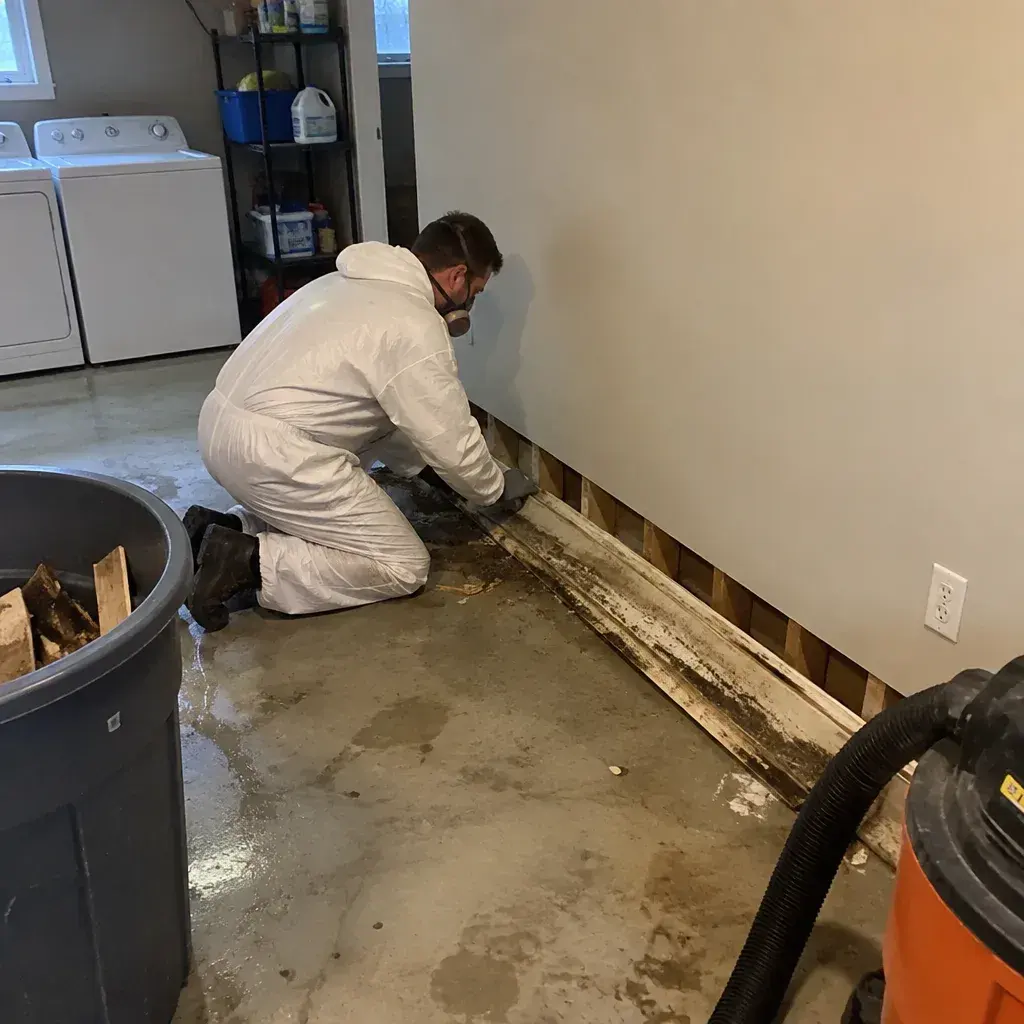
Assess Sewage-Exposed Belongings Safely
Keep people and pets back first; then assess exposure, document belongings, and decide whether cleaning, storage, or disposal is appropriate.
Keep people and pets away until the affected area is assessed. Inventory each belonging by source, material, condition, and exposure; link photos and container labels to its record. Clean only items whose affected parts can be treated, and document storage or disposal decisions.
Keep Out Until Risk Is Assessed
Use a flashlight to inspect visible surfaces before deciding what to handle. Photograph visible damage before belongings are moved, when it is safe to do so. Wait until the space has been assessed before handling anything. The pros we connect you with can help determine which belongings were exposed and what should happen next. This order protects people first and gives you a clearer basis for deciding what to inventory, pack, clean, or set aside for disposal.
Check how each object is made and where contamination may have traveled. A sealed surface can be more accessible to clean than fabric, foam, unfinished wood, or a piece with cavities and tight joints. Before handling an item, note any visible residue or unusual odor that may help describe its condition. Record what you can see and flag places you could not examine. Material and access both shape the next handling decision.
Start with exposure, before you move or sort anything. Contamination can extend beyond the area where sewage is visible. Once the area has been assessed, note which items were in the affected space, whether they were wet or visibly soiled, and how the sewage reached them. This first record helps distinguish items that need removal from those that may be evaluated for cleaning. Sewage damage packout begins with that item-by-item check, not with packing everything together.
Judge Salvage by Material and Exposure
Give each belonging a unique reference before it leaves its original room. Record a useful description, the room or area it came from, its construction, and whether sewage contact was seen, reported, or remains uncertain. For a set of similar objects, describe the group so someone can tell which pieces belong in it. This inventory lets you follow an item through handling, review, cleaning, storage, or disposal without relying on memory.
Write down observable condition in neutral terms: damp, stained, residue present, finish changed, or no visible sign. Add the date of the observation and take photographs that show both the item and details relevant to its condition. Note blocked views or parts you could not inspect instead of treating them as clean. These records distinguish what was visible at assessment from a later conclusion about whether sewage reached the interior.
A sewage damage packout moves belongings away from an affected space while keeping each item linked to its record. Match each box or other container to the inventory references inside, and mark its source area and handling status. Keep items awaiting review identifiable as such. This gives anyone handling the container a way to understand where the contents came from and what decision is still pending, without opening it in a clean area.
Build a Traceable Item Record
An item’s construction can matter more than its outer finish. A smooth case may hide absorbent lining, seams, or enclosed spaces where sewage residue is hard to remove; unfinished wood and upholstered parts can also retain contamination. Sewage contents cleaning may be considered for items whose affected components can be thoroughly cleaned and disinfected. Record why each sewage-damaged belonging is being kept for evaluation or marked for disposal. If cleaning is chosen, follow the disinfectant’s label directions and keep the item separate from belongings not exposed to sewage.
Handle belongings one at a time so each item's condition stays clear during review. Separate items awaiting assessment from those cleared for cleaning or another next step. Update the inventory when a decision changes, so a label does not send someone toward outdated instructions. Containment and clear separation help keep contaminated items from mixing with belongings considered clean.
Pack and Track Final Decisions
For an item set aside for disposal, preserve the link between its identifier and the reason for that decision. Record the observed condition, exposure concern, decision, and date, then attach relevant photographs. If several items share a disposal record, describe the group precisely and retain their individual identifiers. This makes it possible to trace what was removed and why, even after the belongings are no longer available for inspection.
Give every item an inventory entry that links its description and room location to its observed condition and handling decision. Add photographs where useful, then note whether it was packed, moved to storage, cleaned, or set aside for disposal. Match container labels to the same inventory entries, and record where packed items are stored so they can be found without reopening unrelated containers. For items discarded, retain the disposal documentation with the entry. This record keeps each belonging’s history understandable as decisions change.
Belongings Handling Checklist
- Remember to include small belongings and loose contents when you review what may have been exposed.
- Give each item a reference; connect its source, observed condition, exposure uncertainty, photos, and container label in one record.
- For disposal, retain the item reference, observed condition, reason for the decision, date, and supporting images.
- Log each item’s material, condition, and suspected sewage exposure; choose cleaning, storage, or disposal, then label packed belongings and link photos and handling notes to the matching inventory entry.
- Assign each belonging a reference; note its source, material, visible condition, and confirmed or uncertain sewage contact, then photograph identifying features before moving it.
- Mark containers with inventory references and handling status; record cleaning results or disposal reasons, and keep related photos, notes, and receipts with the item record.
Your Questions, Answered
Which sewage-damaged belongings may be unsafe to keep?
Begin by stopping access to the affected area and avoid handling exposed belongings until they have been assessed. Record each item’s location, visible condition, and exposure; take photographs and assign it an inventory entry. Decide whether its materials can be cleaned and disinfected or should be discarded. Label packed items to match the inventory, note their storage location, and keep cleaning records or disposal documentation with the item’s entry.
How do I document belongings before they leave the affected area?
Assign each item a reference and record its description, source area, construction, observed condition, and whether sewage contact is confirmed or uncertain. Photograph visible details and connect each image to the matching record. Note areas that were not visible. Update the entry as the item is packed, reviewed, cleaned, stored, or designated for disposal.
What should labels show while belongings are held for review?
Pack belongings only after the affected area has been assessed and handling can proceed safely. Mark each container with its source area, contents or inventory references, and current status. Record where it is held, keep pending items identifiable, and revise the matching entries when their handling status changes.
Review the Item Record with Pros
Describe the affected areas and visible damage when you request help, so the licensed pros we connect you with can understand the cleanup needs.
Call (877) 386-0069